You didn’t plan to become a caregiver. Maybe a parent’s health changed, a spouse suddenly needs more help, or you’ve slowly realized that someone you love can’t manage everything alone anymore. Family caregiving often begins before anyone even calls it caregiving. This is where you can start figuring out what needs attention, what can wait, and how to make the situation more manageable.
Where Do I Even Start?
When someone you love suddenly needs help, everything can feel urgent at the same time. Medications. Doctors. Meals. Bills. Transportation. Safety. Paperwork. And somewhere in the middle of all of it, you’re supposed to figure out what you’re actually responsible for. You don’t need to organize their entire life today. Start with what affects their immediate health, safety, and day-to-day needs.
Start with the basics:
Find out what medications they take, who their doctors are, what medical conditions you’re dealing with, and whether they can safely manage meals, bathing, dressing, medications, and getting around the house. Then find the important paperwork and contact information. Everything else can be sorted out from there.
Know What You’re Responsible For
Becoming someone’s caregiver doesn’t automatically mean you’re responsible for everything. One person may handle medical appointments while someone else manages finances, groceries, transportation, or household needs. The problem is that families often never actually decide who is doing what — until something gets missed.
Get clear about who is handling:
- Medical appointments and communication with doctors
- Medications, refills, and pharmacy needs
- Bills, banking, insurance, and other financial matters
- Groceries, meals, transportation, and household needs
- Important paperwork and legal documents
- Emergency contacts and what happens if the primary caregiver isn’t available
If several people are involved, write it down. Knowing who is responsible for each part of care prevents duplicated work, missed tasks, and the classic family problem where everyone thought somebody else was handling it.
Get the Important Information in One Place
You do not want to be searching through kitchen drawers, old emails, and piles of paperwork while a doctor is waiting for an answer or you’re trying to handle an emergency. Start gathering the information you’re most likely to need and keep it somewhere you can actually find it.
Start collecting:
- Current medication list, including doses and pharmacy information
- Doctors, specialists, and their contact information
- Medical conditions, allergies, and important health history
- Insurance information
- Emergency contacts
- Preferred hospital and pharmacy
- Copies or locations of healthcare proxy, power of attorney, advance directive, and other important documents
- A current list of appointments and upcoming medical needs
You don’t need a perfect filing system on day one. A folder, binder, notebook, or clearly labeled spot is enough to start. The goal is simple: when someone asks for important information, you know where to look.
Figure Out What They Can Still Do
Needing help doesn’t mean someone suddenly needs help with everything. Before taking over, pay attention to what they can still manage safely on their own and where they’re beginning to struggle. The goal is to provide the help they actually need without unnecessarily taking away independence.
Look at everyday tasks such as:
- Taking medications correctly and on time
- Preparing meals and getting enough to eat and drink
- Bathing, dressing, grooming, and using the bathroom
- Walking, using stairs, and getting in and out of bed or chairs
- Driving or arranging transportation
- Shopping and managing household tasks
- Paying bills and keeping track of finances
- Making appointments and following medical instructions
- Using the phone and knowing who to contact when they need help
You may find that they’re completely independent in some areas, need reminders or occasional help in others, and need someone else to take over certain tasks entirely. That can change over time, so this isn’t a one-time assessment. Keep paying attention and adjust the help as their needs change.
Build a Simple Daily Routine
Once you have a handle on the immediate needs, start creating some predictability in the day. You don’t need a rigid schedule with every hour accounted for. A simple routine helps you remember what needs to happen and can make the day feel more manageable for both of you.
Start with the things that happen regularly:
- Morning and evening medications
- Meals and fluids
- Bathing, dressing, and personal care
- Medical appointments and therapies
- Exercise or movement, when appropriate
- Household tasks and errands
- Rest and quiet time
- Activities they enjoy
- Bedtime and nighttime needs
Pay attention to the person’s existing habits before creating a completely new routine for them. If they’ve eaten breakfast at 7:00, watched the noon news, and taken a shower before bed for the last 30 years, there may be no reason to rearrange their entire day just because caregiving has entered the picture. Familiar routines can make life easier for everyone.
Don’t Take Over Everything
When someone starts needing help, it can be tempting to jump in and do everything for them—especially when doing it yourself is faster or easier. But needing help in one area doesn’t mean they’ve lost the ability to make decisions or participate in their own life. Step in where help is actually needed, while leaving as much control with them as safely possible.
Whenever possible:
- Ask before stepping in rather than automatically taking over.
- Offer help with the part of a task that has become difficult instead of doing the entire task.
- Give them time to do things at their own pace.
- Include them in conversations and decisions about their care.
- Ask what they want instead of assuming you already know.
- Respect preferences that may be different from your own.
- Reassess as their abilities change rather than deciding once what they can or cannot do.
Caregiving should add support where it’s needed, not automatically remove independence. There will be times when safety has to come first, but there are also plenty of times when something simply takes longer, looks a little different, or isn’t done the way you would do it. Different doesn’t necessarily mean unsafe.
Watch for Caregiving Creep
Caregiving responsibilities have a way of growing quietly. You may start by driving someone to appointments or picking up groceries, and before long you’re managing medications, paying bills, making phone calls, handling paperwork, and rearranging your own schedule around their needs. Sometimes that growth is necessary. The important part is noticing when it happens instead of simply absorbing every new responsibility.
Every so often, ask yourself:
- What am I doing now that I wasn’t doing a month or two ago?
- Are their needs increasing, or have I simply started doing more for them?
- Are there tasks someone else could reasonably handle?
- Is there anything they could still be doing themselves?
- Am I missing work, appointments, sleep, meals, or responsibilities in my own life?
- If I couldn’t be here tomorrow, would anyone else know what needs to be done?
You don’t have to wait until you’re completely overwhelmed to change the plan. If the amount of care is growing, that’s information. It may mean responsibilities need to be divided differently, outside help needs to be added, or the person’s needs should be reassessed. A caregiving plan that worked six months ago doesn’t have to keep working forever.
You Don’t Have to Do All of This Yourself
Family caregiving often starts with one person quietly becoming the person who handles everything. Sometimes you live closest. Sometimes you have the most flexible schedule. Sometimes everyone simply assumes you’ll take care of it. Whatever the reason, being the primary caregiver doesn’t mean every responsibility has to belong to you.
Think about who could realistically help with:
- Transportation to appointments
- Grocery shopping, meals, or errands
- Picking up prescriptions
- Making phone calls or scheduling appointments
- Paying bills or managing paperwork
- Sitting with your loved one while you leave the house
- Household chores or yard work
- Checking in by phone or visiting regularly
- Being the backup person if you’re sick, unavailable, or need a break
Help doesn’t have to mean someone taking over half of the caregiving. One reliable task can matter. A sibling who handles prescription refills, a neighbor who brings groceries once a week, or a family member who takes over one appointment a month is one less thing sitting on your shoulders.
And sometimes the people you expected to help simply won’t. You can ask clearly, divide responsibilities, and explain what you need, but you cannot force another person to participate. If family help isn’t available, the next step is figuring out what other support exists rather than continuing to add everything to your own plate.
Know Where to Look for Help
You may need help long before you need a full-time caregiver or a major change in living arrangements. There are many levels of support between doing everything yourself and having someone provide around-the-clock care. What’s available will depend on where you live, the person’s needs, finances, insurance, and eligibility for different programs.
Depending on the situation, help might include:
- Friends, neighbors, or members of your community who can help with specific tasks
- Meal delivery or senior nutrition programs
- Transportation services for older adults or people with disabilities
- Adult day programs
- Home health services when ordered and medically appropriate
- Paid companion or personal care services
- Respite care that gives the primary caregiver time away
- Local senior centers or aging-services organizations
- Condition-specific organizations that offer education, support, or local resources
- Veterans’ programs if the person is eligible
A good place to begin is with the person’s doctor’s office, hospital social worker, insurance company, or local aging-services agency. You don’t need to know exactly what service to ask for. Explain what you’re having trouble managing and ask what resources may be available in your area.
Don’t assume help is unaffordable before you ask. Some services are private-pay, but others may be covered by insurance, provided through community programs, offered on a sliding scale, or available based on age, disability, income, military service, or other eligibility requirements.
Know When Something Has Changed
When you see someone regularly, changes can be surprisingly easy to miss. A little less appetite, a little more trouble walking, a few forgotten medications, or needing more help getting dressed may not seem significant on their own. But small changes over time can tell you that their needs are changing.
Pay attention to changes in things like:
- Eating, drinking, or unexplained weight changes
- Walking, balance, strength, or falls
- Sleeping much more or less than usual
- Memory, confusion, judgment, or behavior
- Managing medications correctly
- Bathing, dressing, grooming, or using the bathroom
- Driving or getting around safely
- Keeping up with bills, mail, appointments, or household tasks
- Mood, interest in usual activities, or social withdrawal
- New or worsening pain, shortness of breath, swelling, weakness, or other physical symptoms
One change doesn’t necessarily mean there is a major problem. What matters is noticing what is different from that person’s usual baseline, whether it continues, and whether several changes are happening together. Write things down when you notice them so you’re not trying to reconstruct the last three weeks from memory in a doctor’s office.
Sudden, severe, or concerning changes are different. If something feels urgent or dramatically different from their normal condition, don’t wait for the next routine appointment. Contact their healthcare provider, seek urgent medical care, or call 911 when appropriate.
You Will Not Get Everything Right
There is no perfect way to be a family caregiver. You will forget things. You will get frustrated. You will make a decision and later wish you had handled it differently. Some days will go smoothly, and other days the simplest thing will somehow become the thing that derails the entire afternoon.
What matters is paying attention, adjusting when something isn’t working, and remembering that caregiving is something you learn while you’re doing it. The person you’re caring for is changing, the situation is changing, and what worked three months ago may not work today.
You don’t need to know everything at the beginning. You need a place to start, a way to keep track of what matters, and enough information to recognize when it’s time to ask for help.
Practical Tools for Family Caregivers
Knowing what needs to be done is one thing. Keeping track of medications, appointments, responsibilities, important information, and everyday care is another. Simple organization tools can help take some of that information out of your head and put it somewhere you can actually find it when you need it.
Caregiving tools that may help
If you’re just getting started, you don’t need a complicated system or a binder full of forms you’ll never use. Start with the tools that solve the problems you’re dealing with right now, and add to your system as your caregiving responsibilities grow.
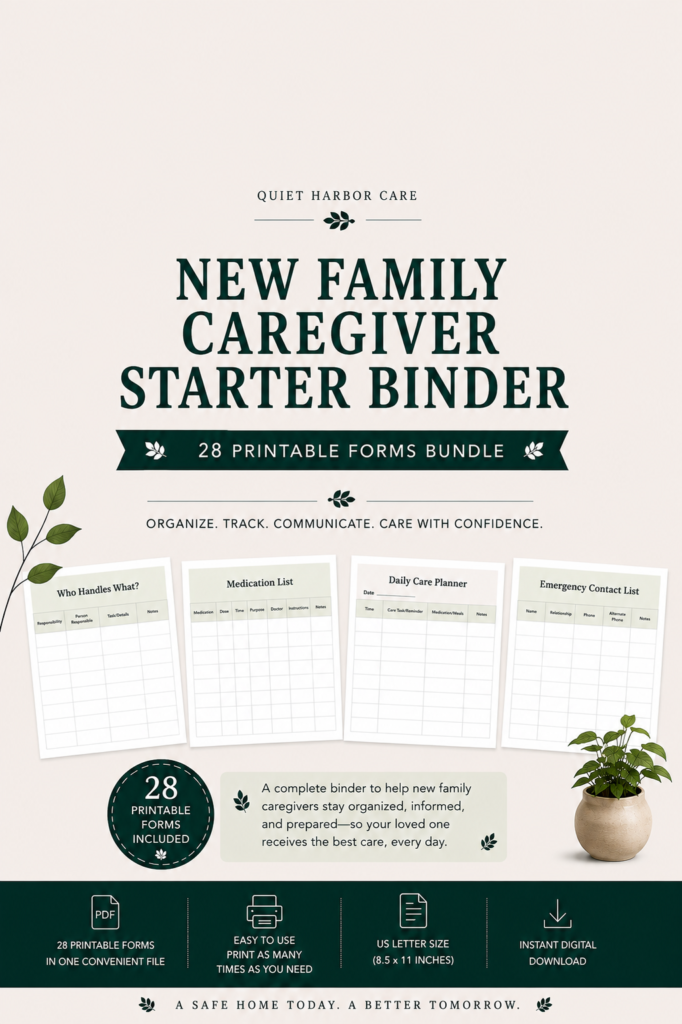
New Family Caregiver Starter Binder
A practical collection of forms to help new caregivers organize the information, responsibilities, and everyday details that suddenly come with caring for someone you love.
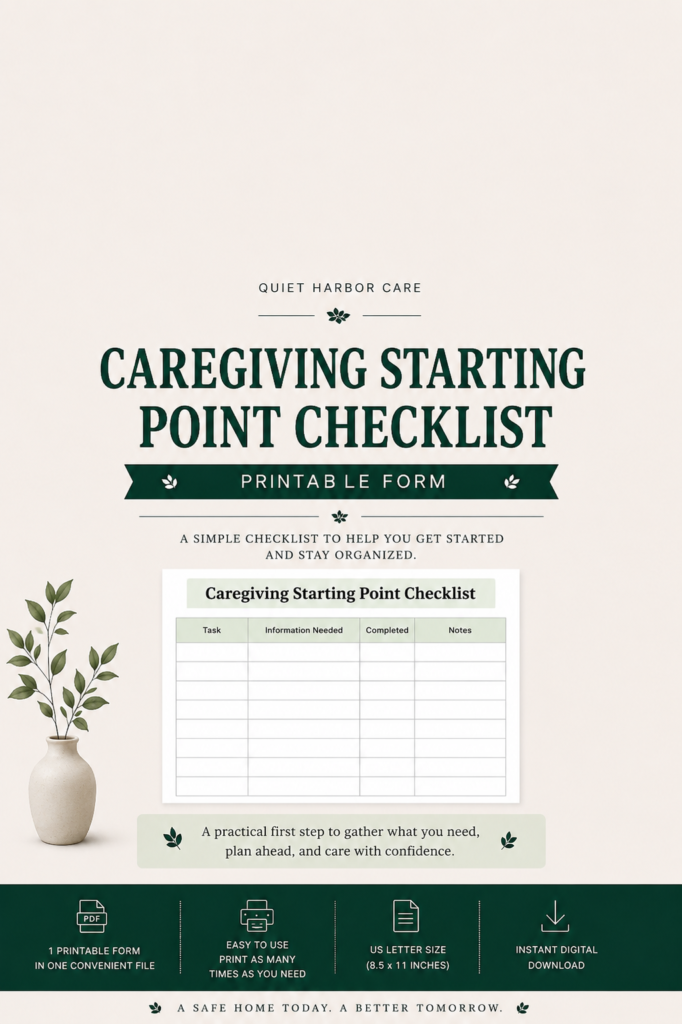
Caregiving Starting Point Checklist
A simple place to identify what needs attention first, what can wait, and what information you still need to gather when caregiving begins.

Medication Daily Tracker
A straightforward way to keep daily medications, times, and doses organized so everyone involved in care can see what needs to be given and when.