Managing medications can become one of the most complicated parts of caregiving. There may be multiple prescriptions, different doses and schedules, refill dates, medication changes, and more than one doctor involved. A simple system can help you keep track of what is being taken, when it should be given, what has changed, and what needs attention—without relying on memory alone.
Keeping an Accurate Medication List
One of the most important things you can do is keep one current list of every medication being taken. Include prescriptions, over-the-counter medications, vitamins, and supplements. Record the medication name, dose, when it is taken, why it is used, and who prescribed it. Update the list whenever something changes, and bring a copy to doctor appointments, urgent care visits, and the hospital.
Making a Medication Schedule Work
A medication list tells you what someone takes; a medication schedule tells you what needs to happen throughout the day. Write down the actual times medications should be given rather than relying on “morning,” “afternoon,” or “bedtime.” If a medication needs to be taken with food, on an empty stomach, or separated from another medication, include that instruction too. A clear schedule also makes it much easier for another family member or caregiver to step in without guessing.
Tracking Medication Changes
Medication changes can happen quickly after a doctor visit, hospital stay, or new diagnosis. When something is started, stopped, or changed, write down the date, the new instructions, and which provider made the change. Don’t erase the old information immediately—you may need to know what was taken previously and when it changed. Keeping a simple history can prevent confusion when several doctors or family members are involved.
Preventing Missed or Double Doses
It’s surprisingly easy to forget whether a medication was already given, especially when several people share caregiving responsibilities. Use a daily tracker, medication log, or other simple system to mark medications as they are given—not hours later. If someone else takes over for part of the day, they should be able to see exactly what has already been given and what is still due.
Staying Ahead of Refills
Running out of medication on a Friday night is a special kind of caregiver aggravation. Keep track of how many doses are left and when refills are due rather than waiting until the bottle is nearly empty. Pay extra attention to medications that require provider authorization, have no remaining refills, or need to be ordered in advance.
Questions to Ask About a New Medication
- What is this medication for?
- What dose should be taken and at what time?
- Should it be taken with food or on an empty stomach?
- Are there medications, supplements, foods, or drinks that should be avoided?
- What side effects should we watch for?
- What should we do if a dose is missed?
- How soon should we expect it to start working?
- Does it require any follow-up appointments, bloodwork, or monitoring?
When More Than One Person Gives Medications
When several family members, caregivers, or aides are involved, everyone needs to use the same system. Avoid separate notes, text messages, or relying on someone to remember to tell the next person what was given. Keep one medication schedule and one record of completed doses where everyone involved in care can access it.
Keep These Medication Details Together
- Current medication list
- Daily medication schedule
- Prescribing doctor for each medication
- Pharmacy name and phone number
- Prescription and refill information
- Medication changes and the dates they occurred
- Allergies and known medication reactions
- Notes about special instructions
- Upcoming refill dates
- Questions for the doctor or pharmacist
A Simple Medication Routine
- Keep medications in one designated location when appropriate and safe.
- Check the schedule at the same time each day.
- Record each dose when it is actually given.
- Update medication records as soon as something changes.
- Review refill needs at least once a week.
- Bring the current medication list to every medical appointment.
When Someone Refuses Their Medication
Medication refusal can happen for many reasons. Someone may be confused, tired, nauseated, having trouble swallowing, worried about side effects, or simply tired of being told what to do. Avoid turning medication time into a battle. Give the person a little time when it is safe to do so, try again calmly, and look for a reason behind the refusal. If missed or refused doses become a pattern, let the prescribing provider know rather than changing the medication schedule yourself.
Watch for Problems After Medication Changes
Pay closer attention whenever a medication is started, stopped, or the dose changes. Write down anything noticeably different, including changes in alertness, balance, appetite, sleep, mood, bathroom habits, or how the person feels. Having specific notes—including when the change began—gives the doctor much more useful information than trying to remember everything during an appointment.
Call the Doctor or Pharmacist When You’re Unsure
You do not have to figure out medication questions on your own. If instructions are unclear, pills look different after a refill, you are unsure whether two medications can be taken together, or you don’t know what to do about a missed dose, call the pharmacy or prescribing provider and ask. Guessing is never a medication-management strategy.
Medication Management Resources
If keeping medication information organized is becoming difficult, these printable tools can help create one clear system for schedules, refills, medication changes, and day-to-day tracking.
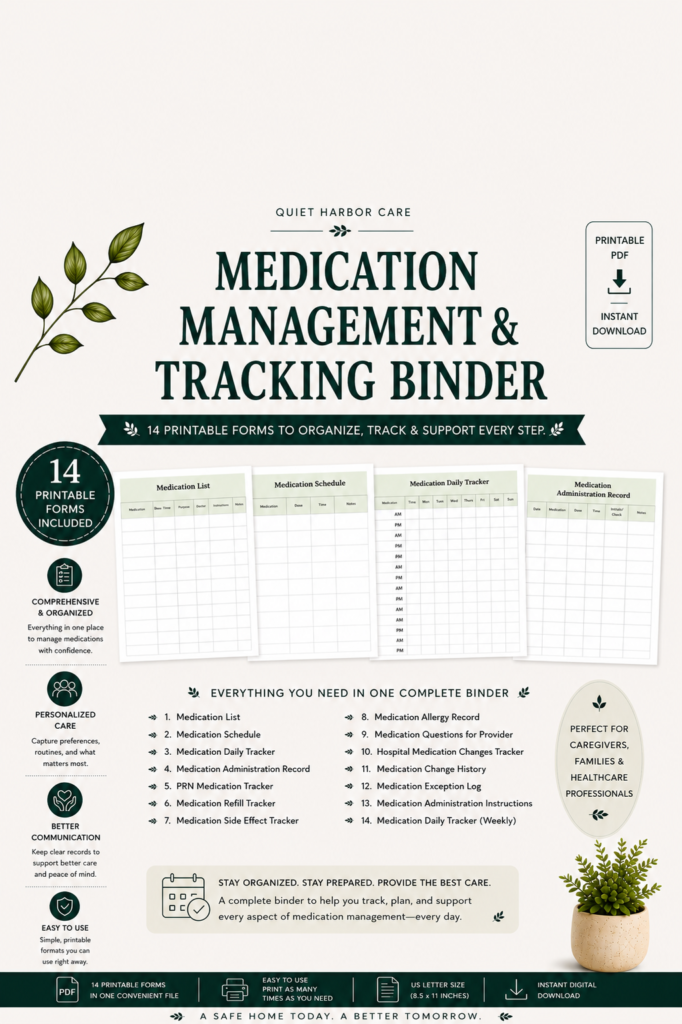
Medication Management & Tracking Binder
A complete set of printable forms for organizing medication lists, schedules, refills, changes, and daily tracking.
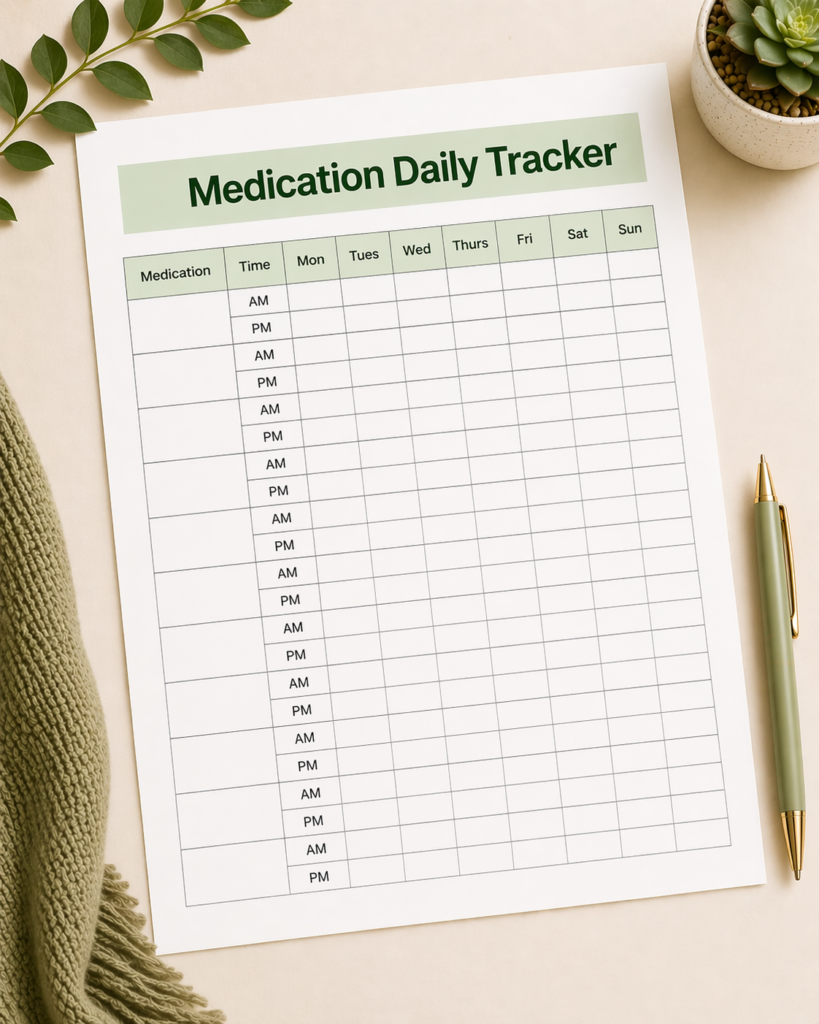
Medication Daily Tracker
A simple way to record daily medication times and doses so everyone involved in care can see what has been given.
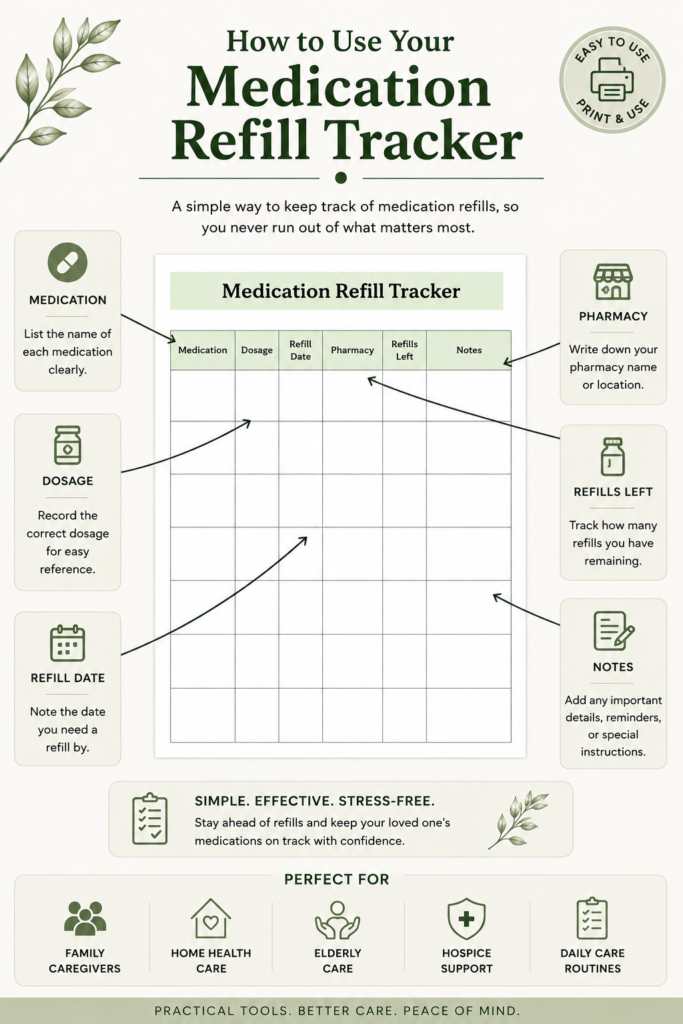
Medication Refill Tracker
Keep refill dates, pharmacy details, and prescription information organized so medications don’t unexpectedly run out.