Practical guidance for family caregivers supporting a loved one with dementia. Find help with daily routines, communication, changing behaviors, safety, organization, and the everyday challenges that come with dementia care.
Dementia Care Resources
Getting Through the Day
Dementia can make ordinary parts of the day—getting dressed, eating a meal, taking a shower, or getting ready for bed—unexpectedly difficult. Simple routines, fewer choices, familiar surroundings, and a calm approach can make daily care easier for both you and the person you’re caring for.
A few things that often help:
- Keep daily routines as consistent as possible.
- Offer one or two simple choices instead of open-ended questions.
- Give one direction at a time and allow extra time for a response.
- Avoid arguing over facts when correcting the person isn’t necessary for safety.
- If frustration is building, change the activity, environment, or subject rather than pushing through.
Communication Without the Battle
Dementia changes how a person understands information, processes questions, and expresses what they need. Conversations that once felt simple can suddenly become frustrating for everyone involved. The goal isn’t to win an argument or correct every detail—it’s to communicate in a way that helps the person feel safe, heard, and respected.
A few things that often help:
- Use short, simple sentences and give the person time to respond.
- Ask one question at a time.
- Avoid correcting details that don’t matter.
- Acknowledge the feeling behind what they’re saying, even when the facts aren’t accurate.
- If a conversation becomes frustrating, redirect rather than continuing to argue the point.
When Behaviors Change
Changes in behavior are often a form of communication. Restlessness, resistance, agitation, wandering, or suddenly refusing something may be the person’s way of showing that they’re uncomfortable, confused, frightened, tired, hungry, or overwhelmed. Instead of focusing only on stopping the behavior, look for what may have changed around them or what need they may be trying to express.
Before assuming it’s “just the dementia”:
- Check for hunger, thirst, fatigue, pain, or needing the bathroom.
- Think about whether the room is too noisy, busy, hot, cold, or unfamiliar.
- Consider whether the person may be frightened or confused by what is happening.
- Look for recent changes in routine, caregivers, medications, sleep, or surroundings.
- Pay attention to sudden or significant changes in behavior and contact their healthcare provider when something seems different from their usual pattern.
Creating a Safer Environment
Dementia can affect judgment, balance, depth perception, and a person’s ability to recognize everyday hazards. A safer environment doesn’t have to feel restrictive. The goal is to reduce unnecessary risks while allowing the person to remain as independent and comfortable as possible.
Simple safety changes can make a big difference:
- Keep walkways clear and remove loose rugs, cords, and other tripping hazards.
- Make sure hallways, stairs, bathrooms, and nighttime pathways are well lit.
- Keep medications, cleaning products, sharp objects, and other potentially dangerous items secured when needed.
- Use clear labels or visual cues to help identify frequently used rooms, drawers, or belongings.
- Reassess safety as abilities change rather than assuming yesterday’s setup will always work.
When Late Afternoon Gets Hard
Late afternoon and evening can be especially difficult for some people with dementia. Confusion, anxiety, restlessness, irritability, or wanting to “go home” may increase as the day winds down. This pattern is often called sundowning. A predictable afternoon routine and a calmer environment can sometimes make these hours easier for everyone.
A few things to try before the difficult hours begin:
- Keep the late-afternoon routine as predictable as possible.
- Reduce noise, television, visitors, and other stimulation if those tend to increase agitation.
- Turn on lights before the room begins getting dark and shadows become more noticeable.
- Offer a familiar, calming activity such as folding towels, listening to music, looking through photos, or taking a short walk.
- Make sure basic needs such as food, fluids, toileting, and comfort have been addressed.
- Avoid scheduling unnecessary or demanding activities during the time of day that is consistently most difficult.
Preserving Independence and Dignity
Dementia changes what a person can do, but it doesn’t erase who they are. Whenever possible, involve them in everyday decisions and allow them to do the parts of a task they can still manage safely. Something may take longer or look different than it once did, and that’s okay. Helping doesn’t always mean taking over.
Look for what they can still do:
- Offer two simple choices instead of making every decision for them.
- Let them participate in dressing, grooming, meals, or household tasks at their own pace.
- Break larger tasks into smaller steps and offer help only when it’s needed.
- Speak directly to the person rather than talking about them as though they aren’t there.
- Avoid rushing in to correct or redo something simply because you would have done it differently.
- Adjust the task as abilities change so they can continue participating safely.
When Caregiving Becomes Too Much
Caring for someone with dementia can be exhausting, especially as their needs increase. You may be managing medications, appointments, meals, personal care, safety concerns, disrupted sleep, and constant supervision while still trying to manage the rest of your own life. Needing help doesn’t mean you’ve failed. It means the amount of care needed has become more than one person can reasonably provide alone.
Signs It May Be Time for More Help
- You are regularly losing sleep because your loved one needs supervision or assistance.
- You cannot safely leave them alone, even for short periods.
- Personal care, transfers, mobility, or other physical needs are becoming difficult to manage alone.
- You are missing your own appointments, work, meals, or basic responsibilities because caregiving takes nearly all of your time.
- Their needs have changed significantly and you’re no longer confident you can manage them safely by yourself.
- You find yourself becoming increasingly exhausted, frustrated, overwhelmed, or unable to recover between difficult days.
- You are worried about what would happen to your loved one if you became sick or unavailable unexpectedly.
Sometimes the people you expect to help simply won’t.
If family members are unwilling, unreliable, or unable to participate, you may need to look beyond the immediate family for support. Respite care, trusted friends, paid caregivers, adult day programs, home health services when appropriate, hospice support, or eventually residential care may become part of the plan. Needing additional help does not mean the person with dementia has to immediately leave home—but one caregiver should not be expected to provide every hour of care indefinitely.
Knowing When the Care Plan Needs to Change
Care needs change as dementia progresses, and a plan that worked six months ago may no longer work today. That doesn’t automatically mean a move to residential care is necessary. It means it’s time to look honestly at what has changed, what is becoming difficult or unsafe, and what additional support might make the current situation manageable.
It may be time to reassess the plan when:
- Falls, wandering, or other safety concerns are becoming more frequent.
- The person needs more help with bathing, dressing, toileting, eating, or mobility.
- Medication management has become difficult or unsafe.
- They need supervision for more hours of the day or can no longer safely be left alone.
- Nighttime waking or confusion is making it difficult for anyone in the household to get adequate rest.
- Medical needs are becoming more complicated.
- The current caregiver can no longer safely provide the physical or emotional level of care required.
- The care arrangement is no longer working despite adding reasonable support.
You Don’t Have to Know Everything Today
Caring for someone with dementia means constantly adjusting to changes you didn’t ask for and often couldn’t have predicted. You don’t need to solve every problem at once. Learn what helps today, pay attention to what is changing, and adjust the plan when something stops working. Good dementia care isn’t about doing everything perfectly—it’s about helping the person you care for feel as safe, comfortable, respected, and connected as possible.
Please note: Quiet Harbor Care provides educational information and practical caregiving guidance based on caregiving experience. This information is not medical advice and is not a substitute for care or guidance from a physician or other qualified healthcare professional. If you are concerned about a new or sudden change in your loved one’s health, behavior, or condition, contact their healthcare provider.
Practical Tools for Dementia Care
Keeping track of routines, medications, appointments, symptoms, behaviors, and changes over time can become overwhelming quickly. Simple organization tools can help keep important information in one place, make caregiver handoffs easier, and give you something concrete to reference when everything starts to blur together.
Caregiving tools that may help
If you’re trying to manage dementia care while also keeping track of medications, appointments, daily needs, and changing routines, having a simple system can take some of the mental load off. These printable caregiver tools were created to help keep important information organized and easier to find when you need it.
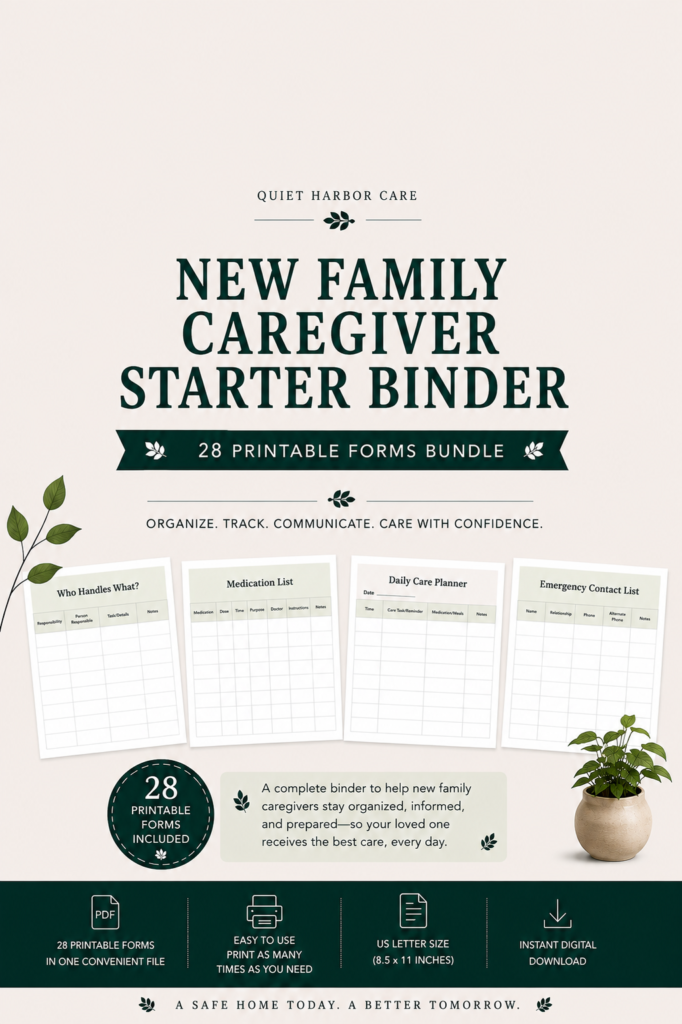
New Family Caregiver Starter Binder
A practical starter bundle to help new family caregivers organize the essential information, routines, contacts, and responsibilities they suddenly need to manage.

Medication Daily Tracker
A simple daily medication log to help caregivers keep track of medications, doses, and whether each dose has been given.
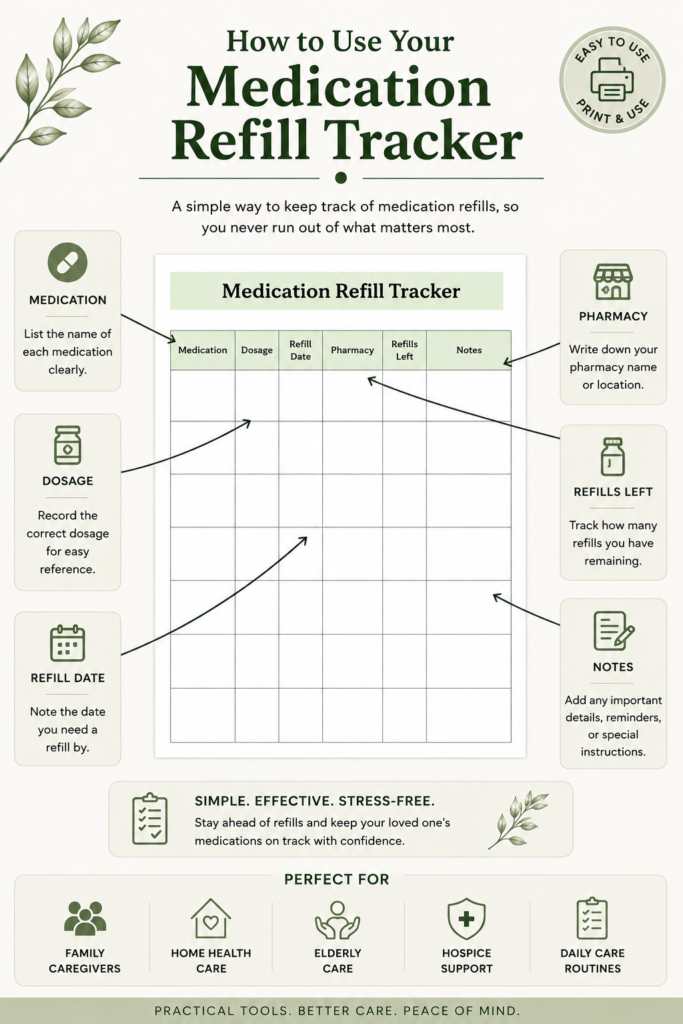
Medication Refill Tracker
A simple way to keep track of prescription refills, remaining medication, pharmacy information, and when it’s time to request the next refill.