Emergencies are stressful enough without having to search for phone numbers, medication lists, medical information, or important documents at the same time. A little preparation can make it easier for family members and caregivers to respond when something unexpected happens. Whether it is a fall, sudden illness, power outage, severe weather, or evacuation, the goal is not to prepare for every possible disaster—it is to make sure the most important information and supplies are ready when you need them.
Start With the Information Someone Would Need in an Emergency
In an emergency, another person may suddenly need to step in and help. Keep essential information somewhere that is easy to find, and make sure the people most likely to help know where it is. This is especially important when the person receiving care has multiple medical conditions, takes several medications, has memory problems, or may not be able to answer questions themselves.
Emergency Information to Keep Current
- Full name and date of birth
- Home address
- Emergency contacts
- Current medication list
- Allergies and medication reactions
- Medical conditions and diagnoses
- Doctors and specialists with contact information
- Preferred pharmacy
- Health insurance information
- Advance directives or healthcare documents, when applicable
- Mobility, communication, or cognitive needs
- Important information emergency responders should know
Know When the Plan Is Simply: Call 911
Not every situation needs a checklist. If someone appears to be having a life-threatening emergency, call 911. Do not delay emergency care while looking for paperwork, contacting family members, or trying to decide which doctor to call. Your emergency information is there to help once help is on the way—not to replace it.
Plan for a Sudden Trip to the Hospital
A hospital trip is not always planned. Keeping a few essentials together can save someone from trying to remember everything while an ambulance is outside or a family member is rushing out the door. At minimum, know where to quickly find the current medication list, insurance information, identification, emergency contacts, healthcare documents, and basic information about the person’s medical history.
Prepare for Power Outages
Power outages can be more than inconvenient when someone depends on medical equipment, refrigerated medication, mobility devices, oxygen equipment, or other electrically powered care. Know which items require electricity, how long backup power will last, and who to contact if an outage becomes prolonged. Keep flashlights and necessary supplies where they can be reached safely in the dark.
Think About Severe Weather Before It Arrives
Weather emergencies are much easier to manage when decisions are made ahead of time. Consider what would happen if the family needed to shelter at home for several days or leave quickly. Keep enough necessary medications and basic supplies available, know where important documents are located, and have a plan for pets, mobility equipment, transportation, and anything else that cannot simply be grabbed at the last minute.
If Evacuation Becomes Necessary
Decide ahead of time where the person could safely go and how they would get there. Someone who uses a walker, wheelchair, oxygen, or other equipment may need more planning than simply getting into the car. Keep a short list of the things that absolutely must leave with them so important medications, equipment, documents, or supplies are not forgotten during the scramble.
Have a Backup Plan for the Caregiver
An emergency may affect the caregiver too. If the primary caregiver becomes sick, is injured, cannot get home, or has to leave unexpectedly, someone else should be able to step in without starting from scratch. Identify at least one backup person who knows the basic routine, where medications and important information are kept, and who to contact if they need help.
Don’t Forget Pets
Pets can complicate an emergency quickly if they are not part of the plan. Keep carriers, leashes, food, medications, and basic veterinary information accessible. If evacuation is necessary, know ahead of time where the pets can go and whether the person’s planned destination will allow them.
Keep Emergency Supplies Practical
You do not need to turn the house into a survival bunker. Focus first on the things the person actually relies on every day and what would become a problem if stores were closed, transportation was unavailable, or the power was out.
- Necessary medications and medication information
- Water and easy-to-prepare food
- Flashlights and batteries
- Phone chargers or backup power
- Basic first-aid supplies
- Incontinence or personal-care supplies, if needed
- Medical equipment and backup supplies
- Copies of important contact and medical information
- Weather-appropriate clothing and blankets
- Supplies for pets
Review the Plan Occasionally
Emergency information is only useful if it is current. Review the plan after a hospitalization, major diagnosis, medication change, move, or significant change in the person’s abilities. Otherwise, checking it every few months is usually enough. Replace expired supplies, update contact information, and make sure everyone still knows where the emergency information is kept.
A Simple Emergency Planning Routine
- Keep one current emergency information sheet easy to find.
- Keep the medication list updated.
- Know where identification, insurance cards, and healthcare documents are kept.
- Maintain a reasonable supply of medications and everyday care supplies.
- Check flashlights, batteries, chargers, and backup equipment periodically.
- Have a plan for power-dependent medical equipment.
- Know who could help if the primary caregiver is unavailable.
- Decide where you could go if the home had to be evacuated.
- Include pets in the plan.
- Review the plan whenever the person’s health or care needs change.
Emergency Planning Resources
Being prepared does not mean trying to anticipate every possible emergency. A few organized resources can help you keep essential information together, make a practical plan, and respond more quickly when something unexpected happens. These printable tools are designed to help families prepare before they are trying to make decisions in the middle of a crisis.
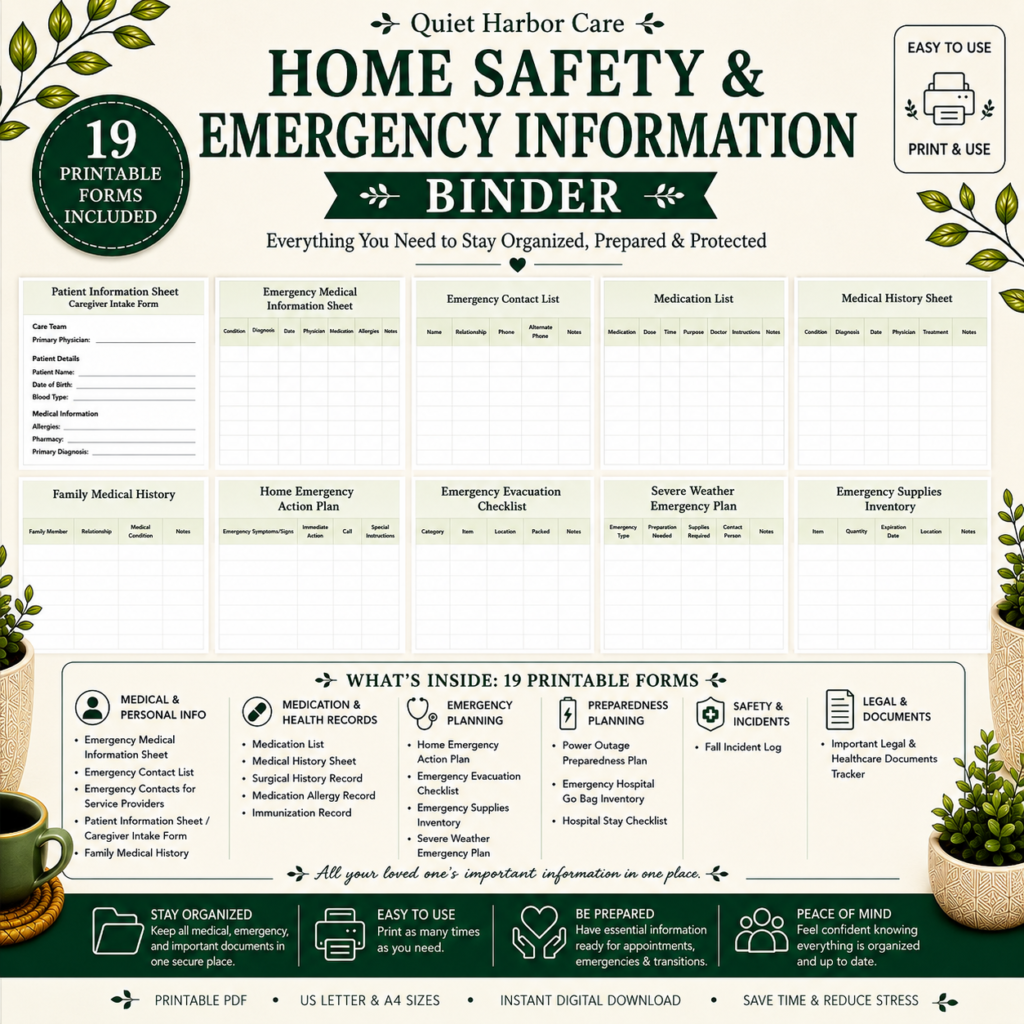
Home Safety & Emergency Information Binder
A comprehensive collection of printable forms for organizing emergency information, home safety details, medical information, contacts, and preparedness plans in one place.
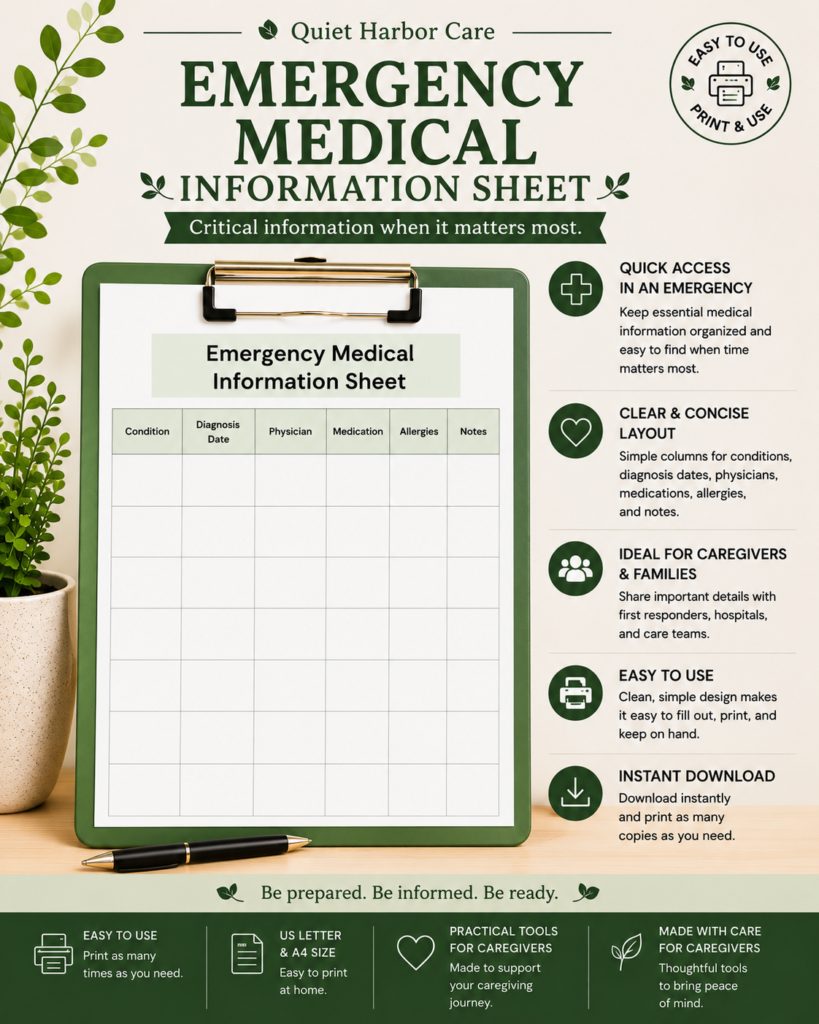
Emergency Medical Information Sheet
Keep essential medical details together in one easy-to-find place so family members, caregivers, or emergency responders can quickly access the information they may need.
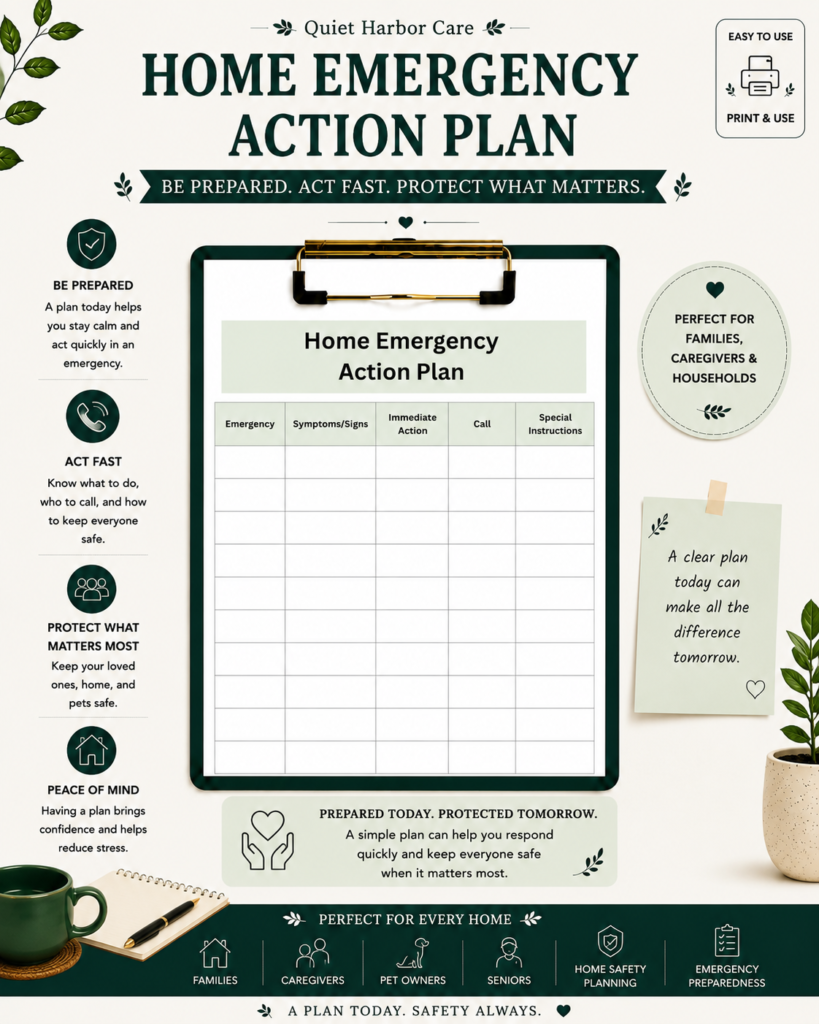
Home Emergency Action Plan
Create a simple, practical plan for what to do during an emergency, including important contacts, responsibilities, and the information your family may need when there is little time to figure things out.