A hospital stay can change a family’s caregiving role almost overnight. A fall, illness, dehydration, infection, or sudden change in health may be the first sign that someone needs more help than the family realized. Between hospital updates, medication changes, discharge instructions, follow-up care, and figuring out what will be needed at home, there can be a lot to manage very quickly. This section will help you keep track of what is happening now, prepare for discharge, and make the transition home a little more manageable.
What to Keep Track of While They’re in the Hospital
Hospital days can blur together quickly, especially when different doctors, nurses, therapists, and specialists are involved. Keep simple notes about what happened each day, who you spoke with, tests or procedures that were done, medication changes, and anything the care team wants you to follow up on. You do not need to record every detail—focus on information you may need later or need to share with someone else.
Questions to Ask the Hospital Team
- What caused the problem that brought them to the hospital?
- What tests or procedures have been done, and what did they show?
- Have any medications been started, stopped, or changed?
- Are there new diagnoses we need to know about?
- What needs to happen before they can safely leave the hospital?
- Will they need physical, occupational, or other therapy?
- What changes should we expect when they go home?
- Who should we contact if we have questions after discharge?
Start Thinking About Home Before Discharge Day
Do not wait until someone is standing at the bedside with discharge papers to start thinking about home. Consider whether the person can safely walk, use the bathroom, prepare food, manage medications, get in and out of bed, and be alone. A person who was managing independently before the hospital may temporarily—or permanently—need more help afterward.
Take a Fresh Look at the Home
Sometimes a hospitalization is when a family first realizes that things at home have changed. You may notice unopened mail, spoiled food, missed medications, laundry piling up, an empty refrigerator, fall hazards, or signs that everyday tasks have become harder. Don’t treat that as a failure. Treat it as information. It can help the family figure out what support needs to be put in place before the person returns home.
Before Leaving the Hospital
- Get written discharge instructions.
- Get an updated medication list.
- Confirm which old medications should be stopped.
- Know when new medications should begin.
- Schedule or write down needed follow-up appointments.
- Ask about activity, diet, wound care, or other restrictions.
- Find out whether equipment is needed at home.
- Confirm whether home health or therapy has been ordered.
- Know which symptoms mean call the doctor and which mean get emergency help.
- Make sure you know who to call with questions after discharge.
The First Few Days at Home
Coming home does not always mean everything is back to normal. The first few days may involve new medications, weakness, poor appetite, disrupted sleep, confusion, mobility problems, or a new level of dependence. Keep the routine simple, follow the discharge plan, watch for changes, and write down questions as they come up instead of trying to remember everything for the next appointment.
Recovery May Take Longer Than Expected
Even a relatively short hospital stay can leave an older adult weaker and more tired than they were before. They may need more help with walking, bathing, dressing, meals, medications, or getting to the bathroom for a while. Recovery is not always a straight line, either. Some days may be better than others. Pay attention to the overall direction rather than expecting everything to return to normal immediately.
Keep an Eye on Changes After They Come Home
You know what is normal for the person you care for. After a hospital stay, pay attention to anything noticeably different—especially changes in alertness, breathing, appetite, mobility, pain, bathroom habits, swelling, weakness, or confusion. Write down what you notice and when it started. If something concerns you or does not match the discharge instructions, contact the appropriate healthcare provider rather than waiting for the next scheduled appointment.
Organize the Follow-Up Care
- Primary care follow-up appointment
- Specialist appointments
- Lab work or testing that still needs to be completed
- Physical, occupational, or other therapy
- Home health visits
- New or changed medications
- Wound or incision care
- Equipment or supplies needed at home
- Transportation to appointments
- Questions that need to be discussed with the doctor
When the Hospital Stay Changes the Bigger Picture
Sometimes the biggest outcome of a hospitalization is realizing that the old arrangement is no longer working. Someone who lived independently may now need help with medications, meals, transportation, personal care, housekeeping, or medical appointments. That does not mean every decision has to be made immediately. Start with what is needed for safety and day-to-day care, then work outward from there. A hospital stay can be the point where a family begins building a caregiving plan that did not exist before.
Hospital & Recovery Resources
When you’re trying to keep track of hospital information, discharge instructions, medication changes, and follow-up care, having everything in one place can make the transition home much easier. These printable tools are designed to help families organize the details that are easiest to lose in the shuffle.
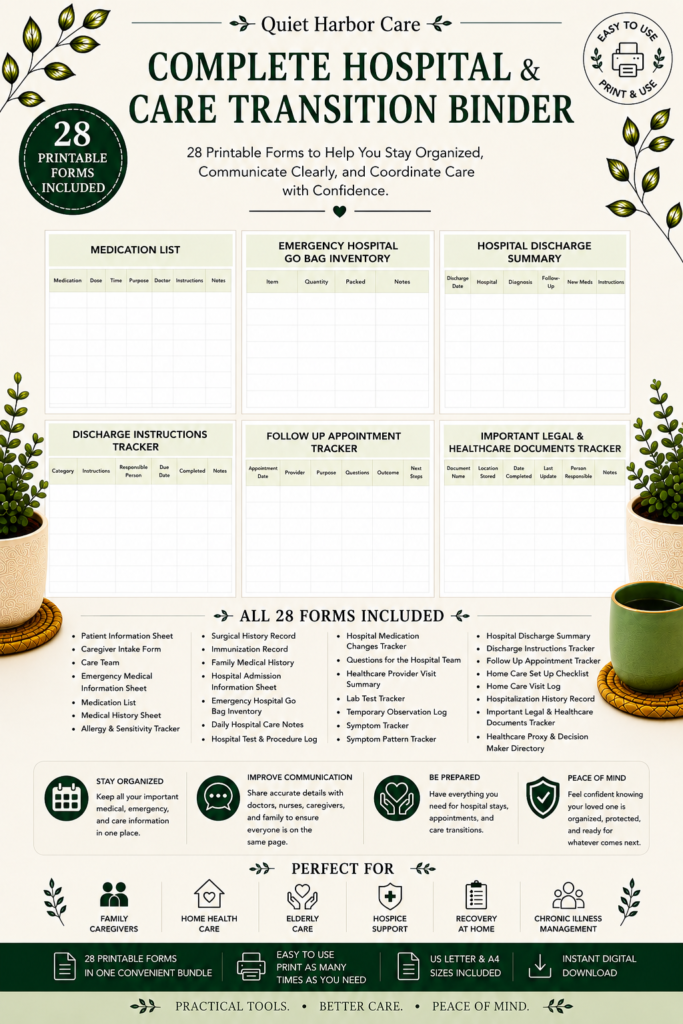
Complete Hospital & Care Transition Binder
A complete set of printable forms for keeping hospital information, discharge instructions, medication changes, follow-up care, and the transition home organized.
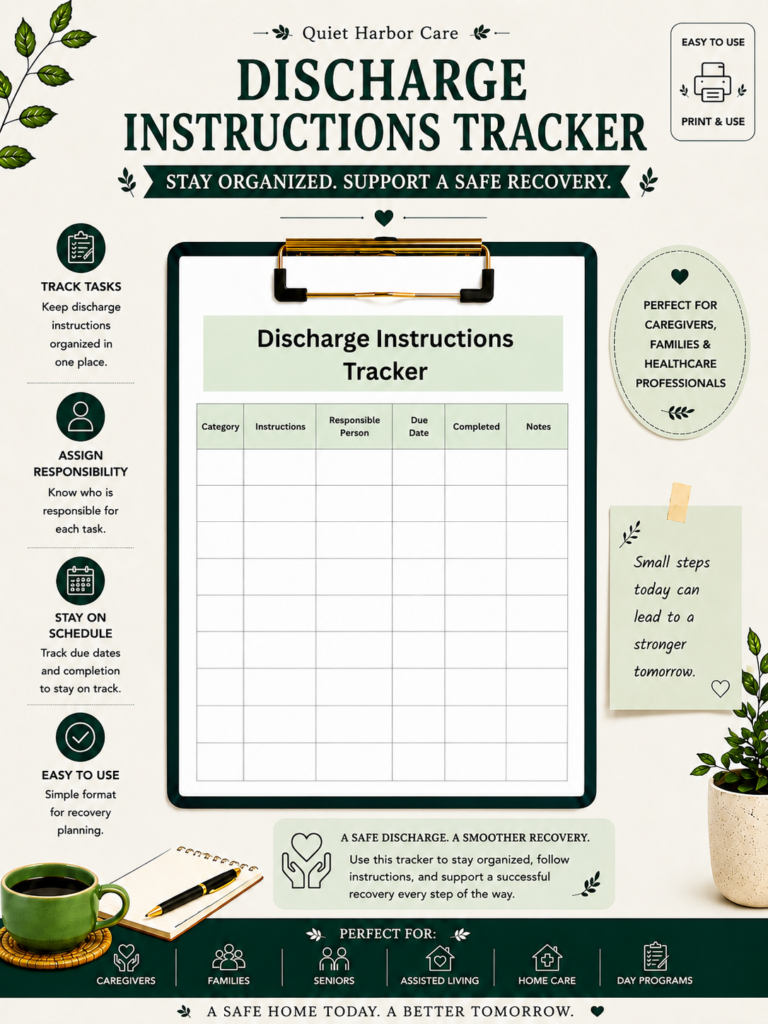
Discharge Instructions Tracker
Keep important discharge instructions, restrictions, follow-up care, and other details together so nothing gets lost once you’re back home.
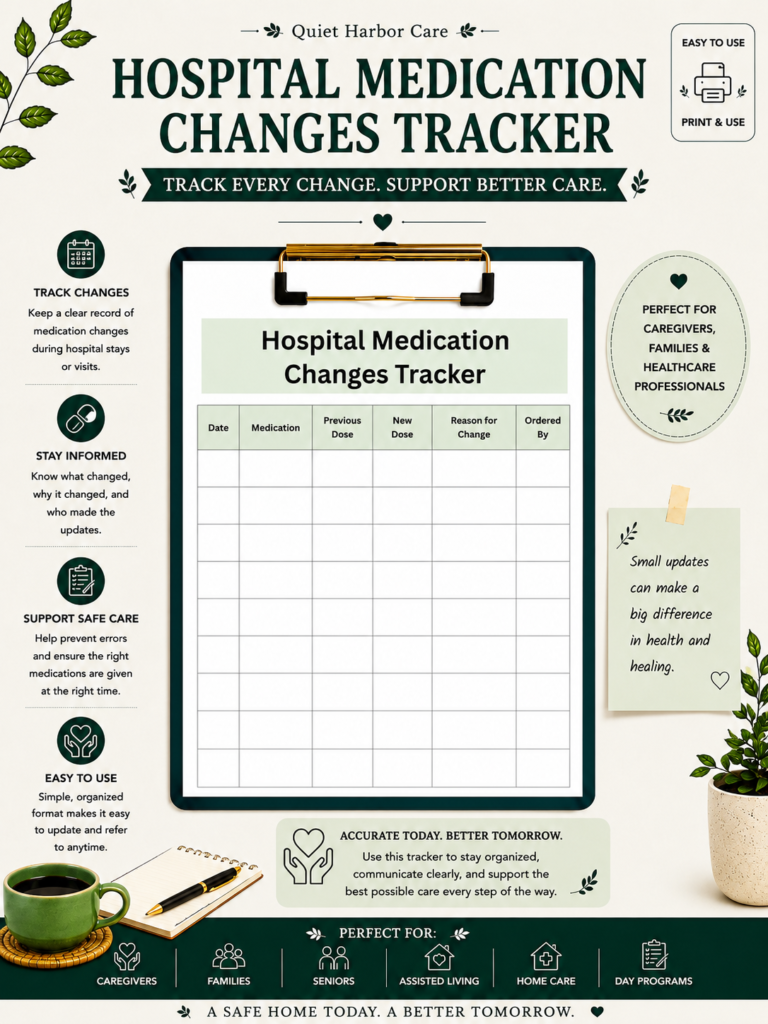
Hospital Medication Changes Tracker
Record medications that were started, stopped, or changed during a hospital stay so you have a clear record to bring home and share with other providers.