Keeping track of medical information can become a job of its own. Doctor names, medication lists, test results, hospital paperwork, insurance information, appointments, and changes in health can quickly end up scattered across folders, notebooks, patient portals, and kitchen counters. A simple organization system makes it easier to find what you need, share accurate information with healthcare providers, and keep everyone involved in care on the same page.
Keeping the Most Important Information Together
You do not need to organize every piece of medical paperwork ever created. Start with the information you are most likely to need during an appointment, hospital visit, or emergency. Keep one current set of essential information somewhere easy to find, and make sure anyone regularly involved in care knows where it is.
Medical Information to Keep Current
- Current medication list
- Medical conditions and diagnoses
- Allergies and medication reactions
- Doctors and specialists with contact information
- Pharmacy name and phone number
- Health insurance information
- Emergency contacts
- Recent hospitalizations and procedures
- Upcoming appointments
- Recent medication or treatment changes
- Important test results
- Advance directives or healthcare documents, when applicable
Don’t Rely on the Patient Portal for Everything
Patient portals are useful, but they are not always the whole picture. Someone who sees several doctors may have information spread across different hospital systems, specialists, labs, pharmacies, and portals. Keep your own basic record of the information you need most often so you are not trying to remember passwords or search through several systems when someone asks a question.
Keep a Simple Health History
You do not need to recreate an entire medical chart. Keep a straightforward timeline of major diagnoses, surgeries, hospitalizations, procedures, significant illnesses, and other important changes in health. Include approximate dates when exact dates are not known. That history can be especially helpful when meeting a new doctor or when someone else suddenly needs to step into the caregiving role.
Tracking Appointments Without Losing the Details
Appointments create more information than just a date and time. Keep track of why the appointment was scheduled, questions you want to ask, what the provider recommended, medication or treatment changes, tests that were ordered, and what needs to happen next. A few notes made during or immediately after the visit can save a lot of “Wait…what did she say about that?” later.
Keep Track of Tests, Procedures, and Results
When a test or procedure is ordered, write down what was ordered, who ordered it, when and where it will be done, and whether any preparation is required. Afterward, record when the results were received and whether the doctor recommended any follow-up. Do not assume that no news automatically means everything is fine—know who to contact if results have not been received when expected.
What to Bring to a Medical Appointment
- Current medication list
- Insurance cards and identification
- List of allergies and medication reactions
- Recent symptoms or changes in health
- Questions you want answered
- Relevant blood pressure, glucose, weight, or other home records
- Information from recent hospital or specialist visits
- Any forms or paperwork the office asked you to bring
- A notebook or place to record instructions and follow-up
When Several Doctors Are Involved
Specialists may each be focused on one part of a person’s health, and they may not always have the most current information from every other provider. Tell each doctor about important diagnoses, medication changes, recent hospitalizations, new symptoms, and treatment recommendations from other providers. Keeping your own current records gives you something concrete to work from instead of hoping every computer system has communicated perfectly.
When More Than One Family Member Is Helping
When several people are involved in care, decide where the main medical information will be kept and who is responsible for updating it. Everyone does not need their own separate version. Multiple notebooks, text-message chains, and medication lists can quickly create conflicting information. One current record that everyone uses makes it much easier to know what actually happened and what still needs to be done.
A Simple Medical Organization Routine
- Update medication information whenever something changes.
- Add new appointments as soon as they are scheduled.
- Write down questions as they come up instead of trying to remember them later.
- Record important instructions after appointments.
- File new test results, discharge papers, and medical records in the appropriate place.
- Review upcoming appointments and follow-up needs once a week.
- Remove outdated copies of information that could cause confusion.
- Keep the most important current information somewhere easy to grab for an unexpected hospital or urgent care visit.
Medical Organization Resources
Keeping medical information organized does not have to mean creating a complicated filing system. These printable tools can help keep important health information, records, appointments, and changes together so they are easier to find when you need them.
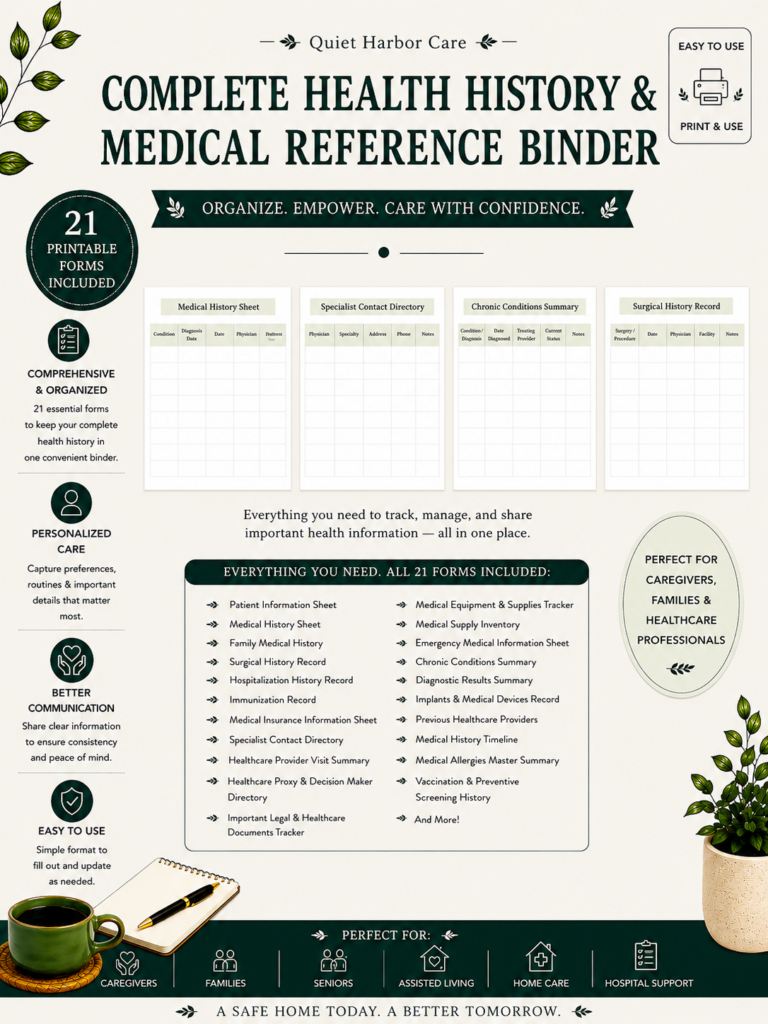
Complete Health History & Medical Reference Binder
Keep important health history, diagnoses, providers, procedures, and other medical information together in one organized reference.
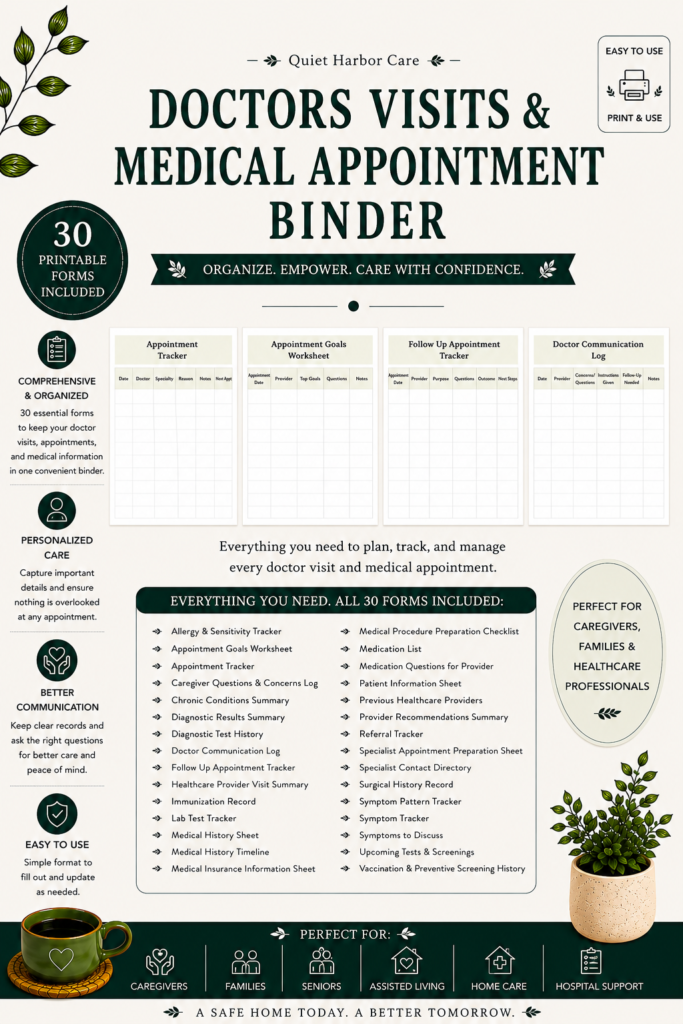
Doctors Visits & Medical Appointment Binder
Organize appointments, questions, symptoms, referrals, follow-up care, and information from medical visits in one place.
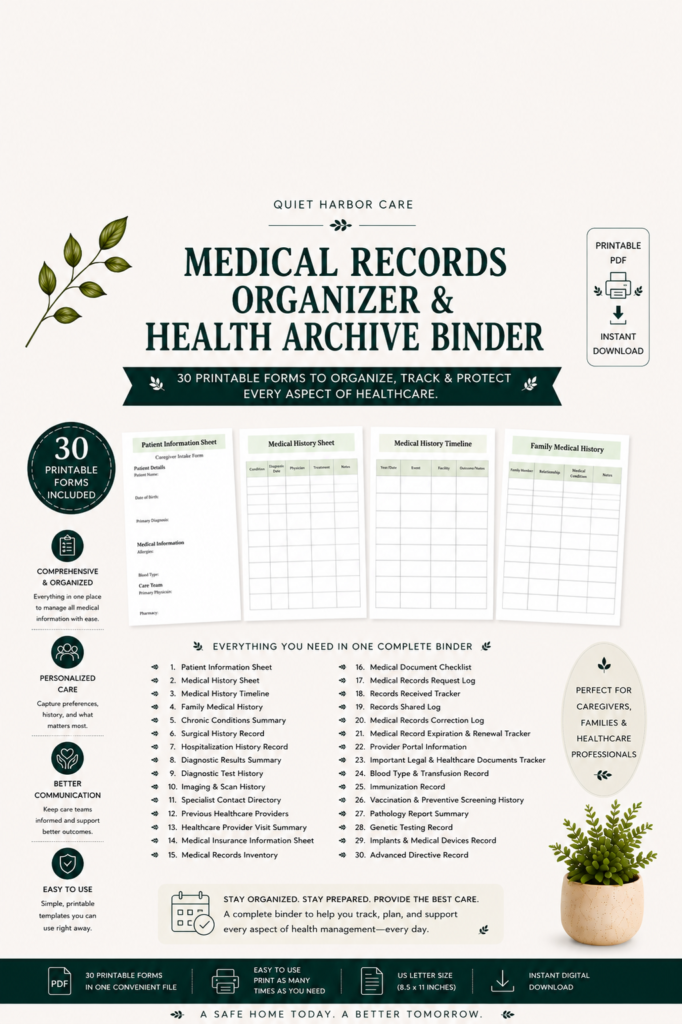
Medical Records Organizer & Health Archive Binder
Keep medical records, requests, received documents, shared records, corrections, and other important health paperwork organized.